Full Description
View Full Description
Cleaner conversations with smart voice processing
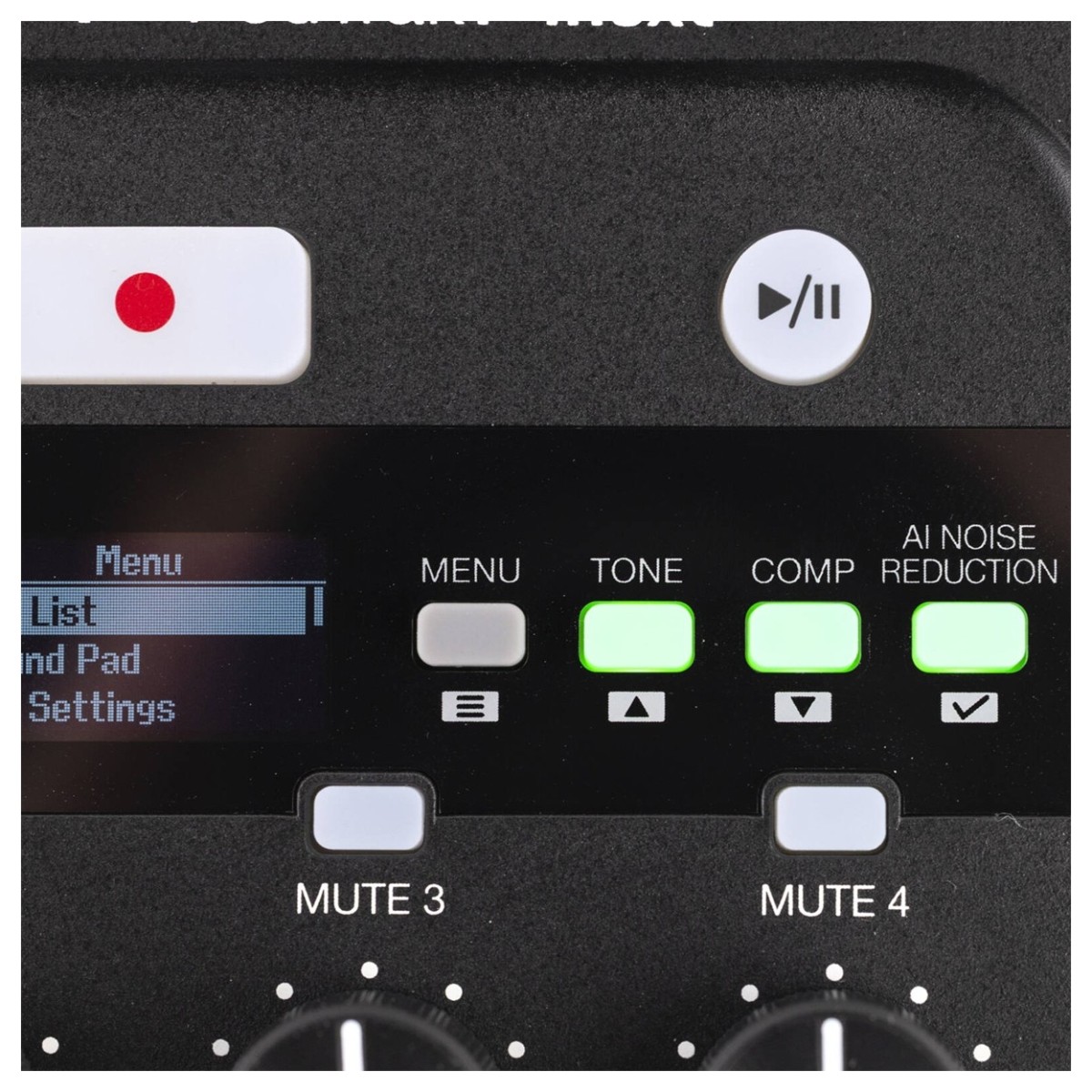
Background noise can quickly distract from a good discussion, especially when recording outside a treated studio. The PodTrak P4next addresses this with built-in AI noise reduction that learns and removes unwanted sounds like hums, buzzes, and traffic. This processing helps keep voices clear and detailed without making them sound artificial.
Alongside this, the tone feature adds gentle EQ and de-essing to reduce harshness and bring warmth to spoken voices. A dedicated compressor then smooths out volume differences, keeping whispers, laughter, and louder moments controlled and comfortable to listen to.
Designed to work with any podcast microphone
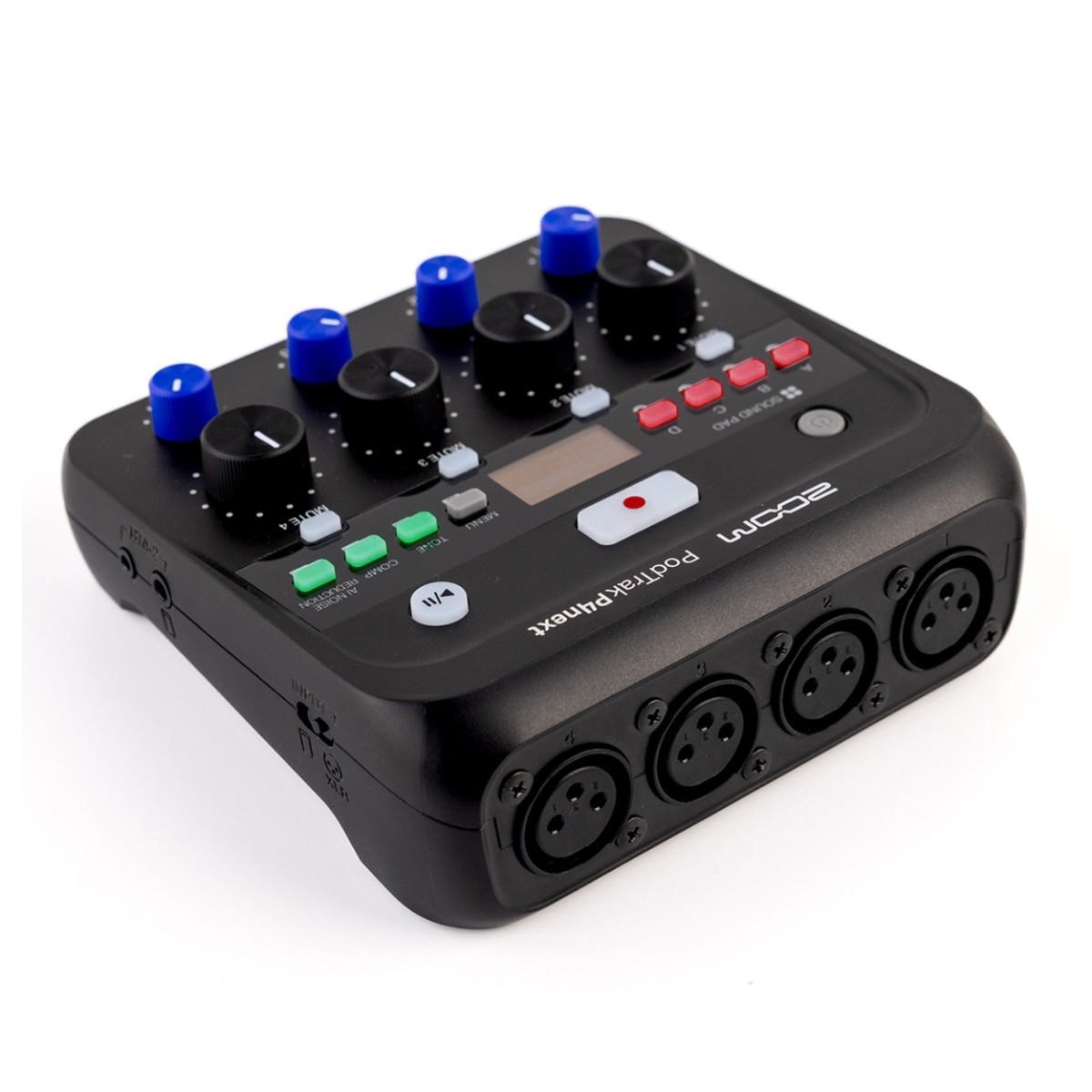
Some microphones demand more gain than others, and the P4next is ready for that. Its four XLR inputs provide up to +70 dB of clean gain, giving you plenty of headroom for dynamic broadcast microphones as well as condensers. Phantom power is available on all channels, so powering studio mics is simple.
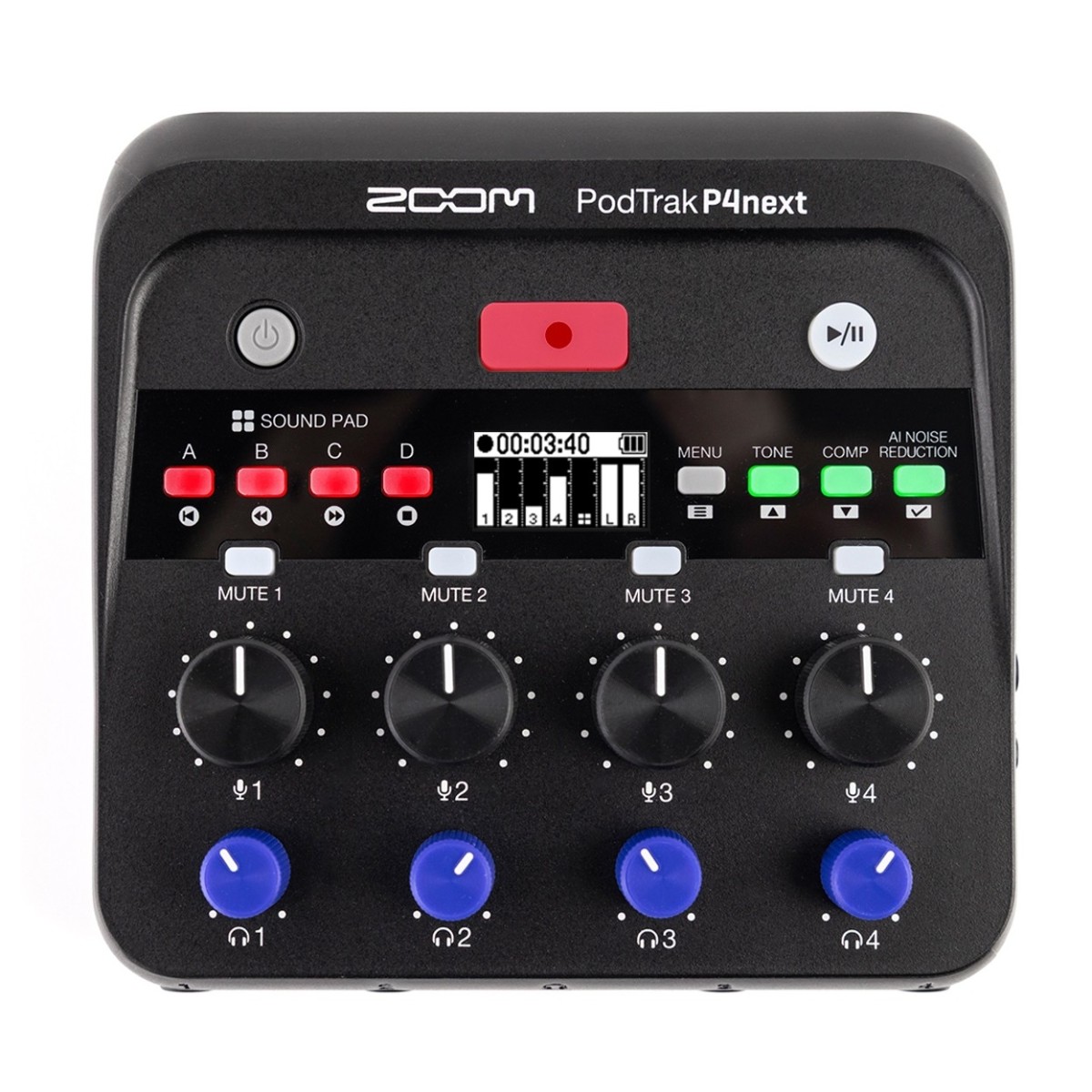
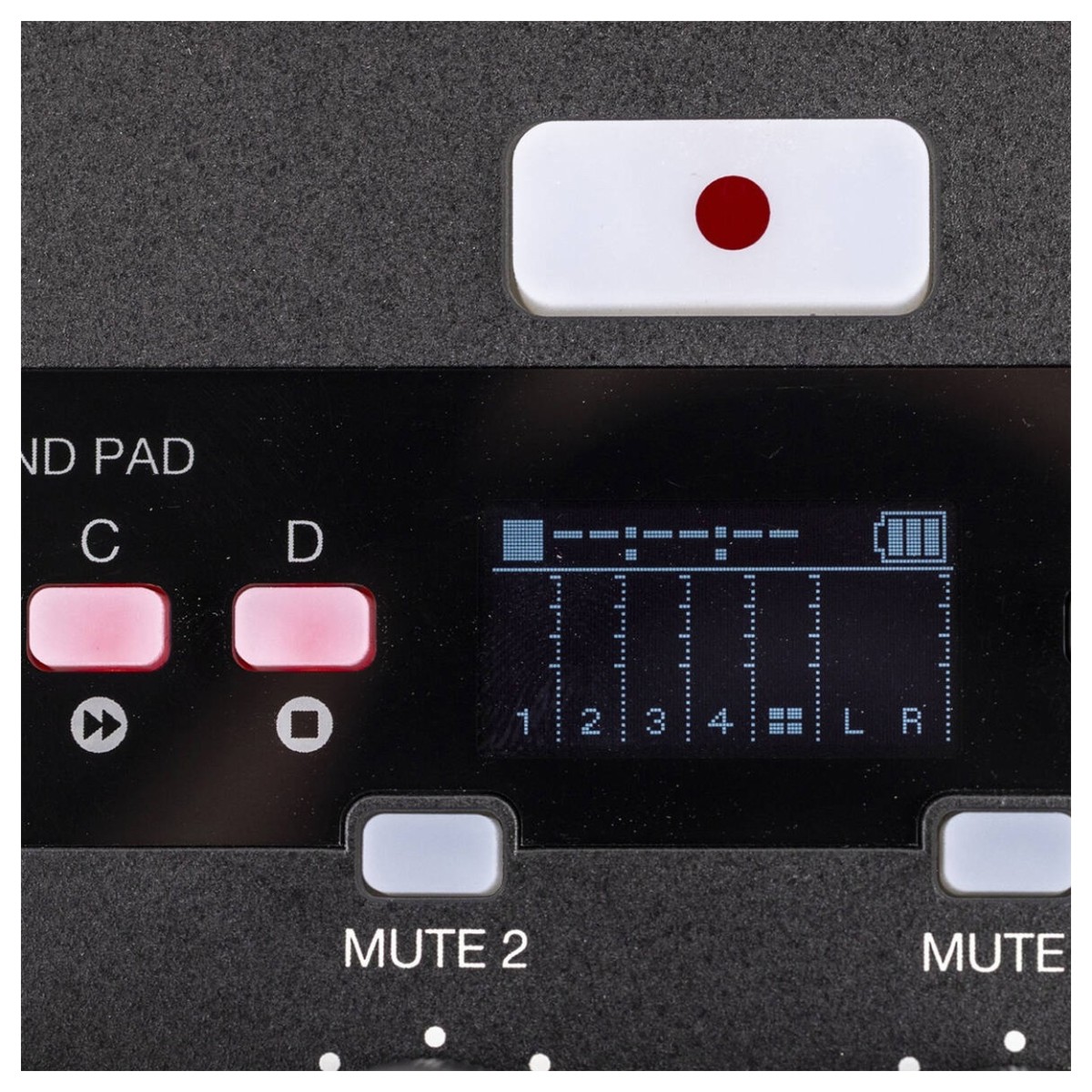
Each input has its own dedicated volume knob, letting you balance multiple hosts quickly during a session. A clear screen with level meters makes it easy to keep an eye on your signal and avoid unwanted clipping.
Flexible setups for guests, video, and travel
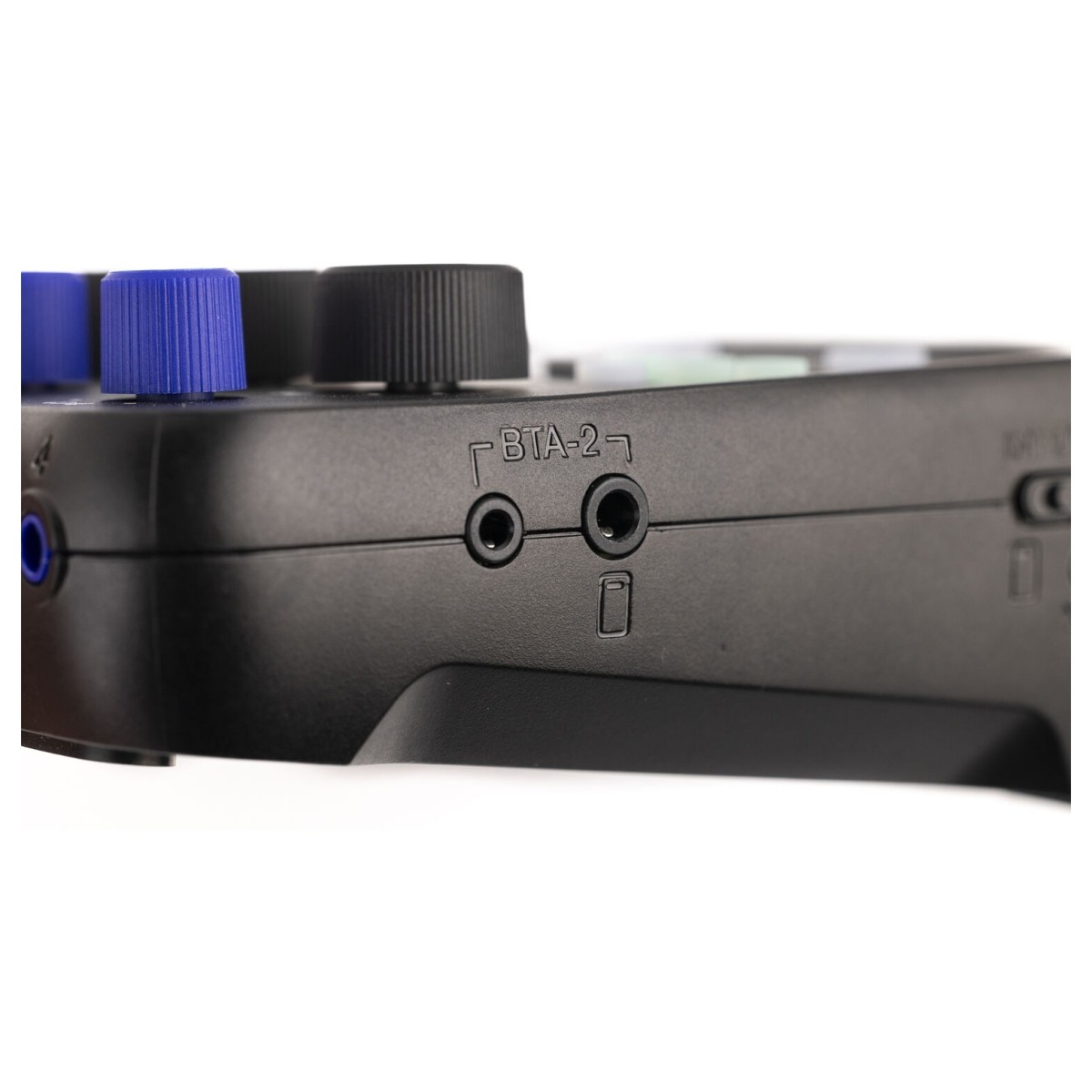
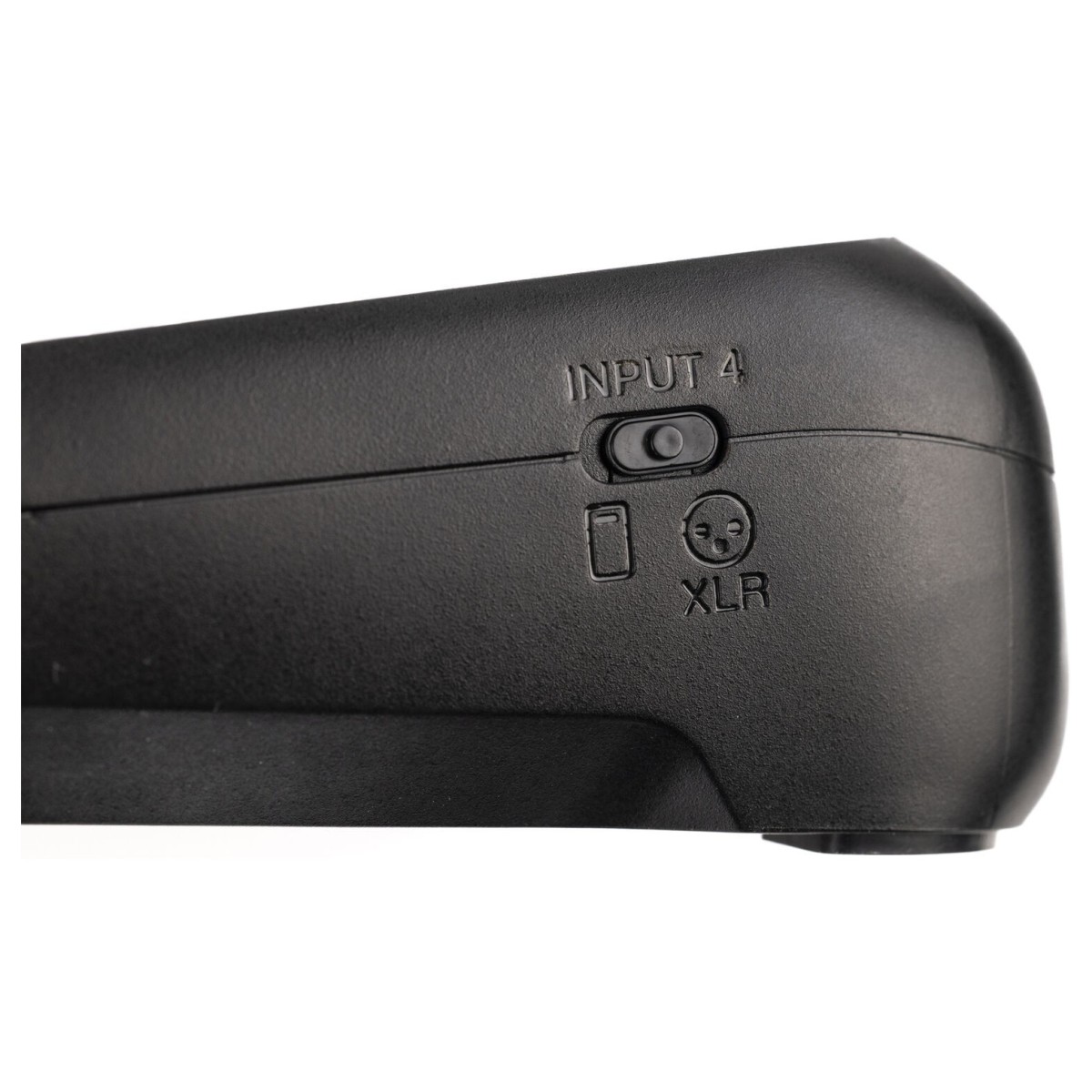
The P4next is built to support modern podcast formats. You can bring in up to two remote guests using USB, Bluetooth with the optional BTA-2 adapter, or the TRRS input, while still using the remaining mic inputs for in-person hosts.
Built-in mix-minus automatically prevents echo and feedback, which is especially useful for remote interviews. For podcasters working with video, the P4next records in 48 kHz, 24-bit audio, matching common video standards. You can also connect it directly to a smartphone and record high-quality audio straight into your video files.
Portable control and complete monitoring
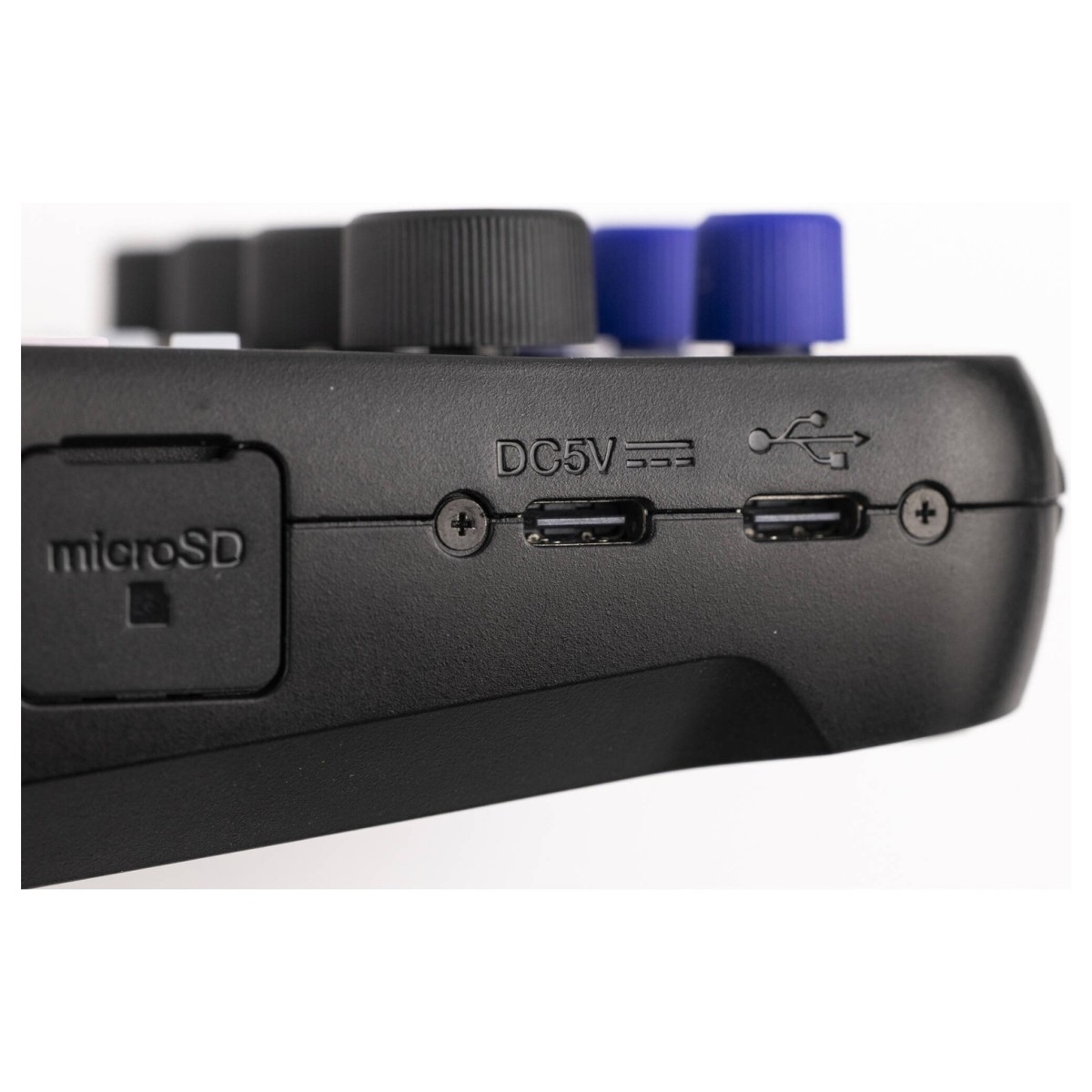
Recording on location is straightforward thanks to the compact design and flexible power options. The P4next can run on two AA batteries or via USB from a mobile battery, computer, or suitable AC adapter. Four independent headphone outputs with individual volume controls ensure everyone at the table hears clearly and comfortably. Mute buttons on each mic help eliminate unwanted noise during breaks.
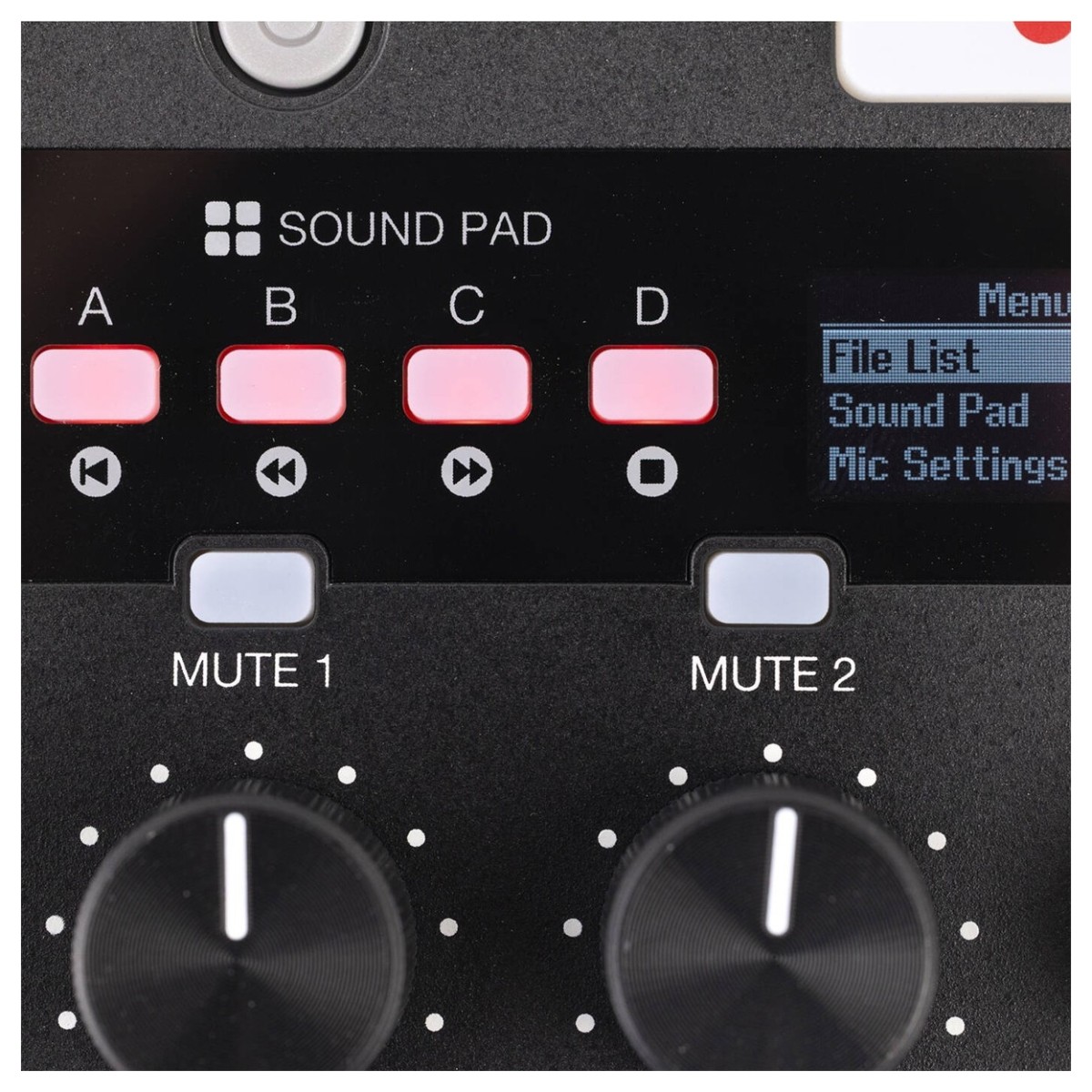
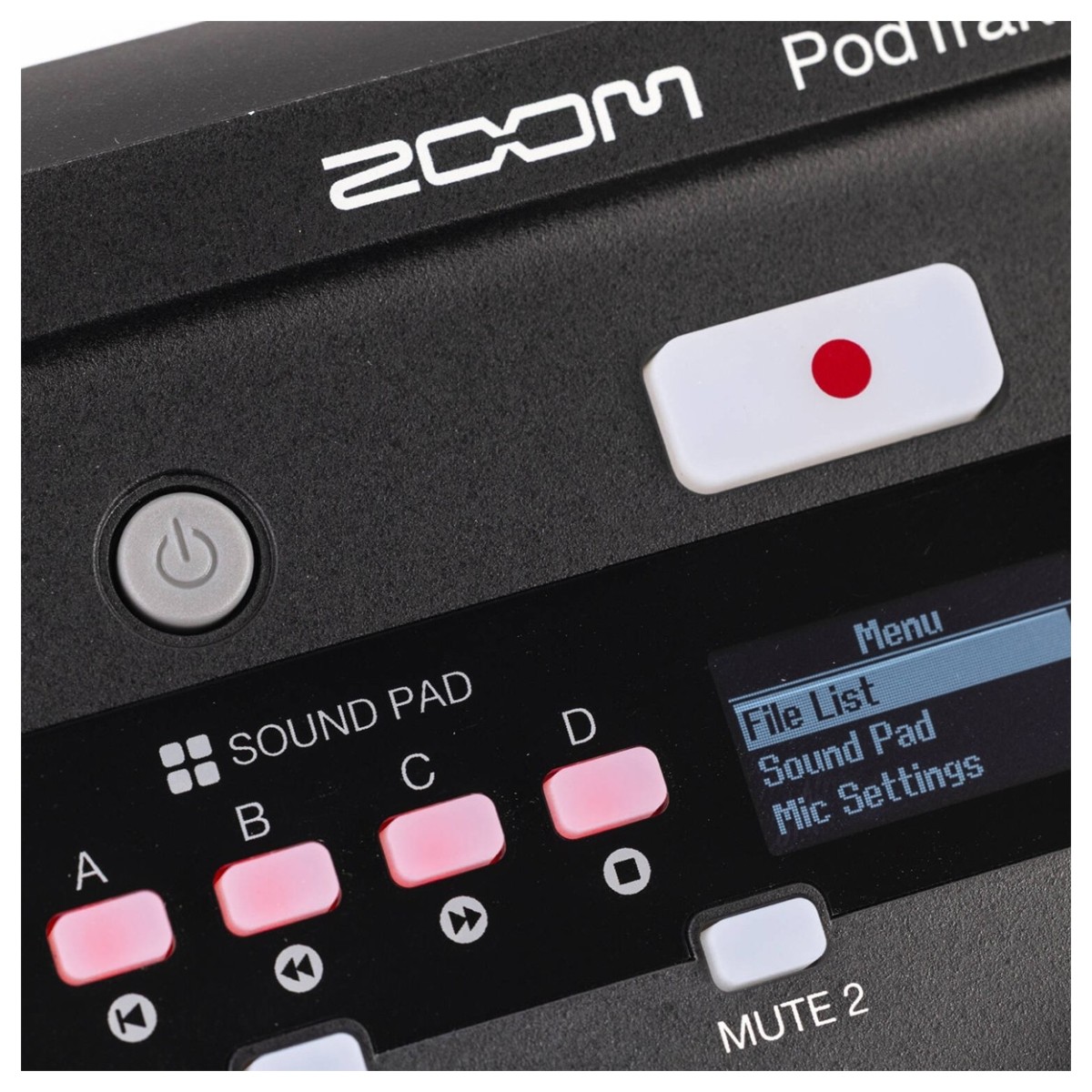
Four sound pads add another layer of polish, letting you trigger intros, jingles, and sound effects instantly using built-in sounds or your own recordings. As a USB-C audio interface, the P4next works with PC, Mac, iOS, and Android, supporting multitrack recording when needed. It saves a ready-to-publish stereo mix alongside individual tracks to a microSD card up to 2 TB, and voice guidance through headphones helps you navigate menus confidently during setup and recording.
Features
- Four XLR inputs with up to +70 dB gain support a wide range of podcast microphones
- AI-powered noise reduction cleans up background distractions in real time
- Integrated tone shaping and compression deliver a balanced, broadcast-ready sound
- Independent headphone outputs with volume control ensure personal monitoring for each participant
- Portable design runs on AA batteries or USB power for location flexibility
- Mix-minus and multiple input options enable smooth remote guest integration
- Sound pads allow instant playback of custom or preloaded jingles and effects
- USB-C interface supports multitrack recording on PC, Mac, iOS, and Android
- Records individual tracks plus stereo mix directly to microSD up to 2 TB
- Voice-guided menus via headphones simplify setup and operation
Specifications
- Input And Output Channels:
- Inputs: Mono (MIC/LINE): 8, Stereo (LINE): 2
- Outputs: Master Out: 1, Monitor Out: 5
- Inputs:
- Mono (MIC/LINE):
- Type: XLR/TRS Combo Jacks (XLR: 2 HOT, TRS: TIP HOT)
- Input Gain: PAD Off: +16 – +60 dB, PAD On: −10 – +34 dB
- Hi-Z On: 0 – +44 dB (When Gain Boost Off)
- Input Impedance: XLR: 4.6 kΩ Or More, TRS: 4.6 kΩ / 1 MΩ (Hi-Z On)
- Maximum Input Level: PAD Off: −2 dBu (At 0 dBFS), PAD On: +24 dBu (At 0 dBFS)
- Phantom Power: +48 V
- Stereo (LINE):
- Type: TS Phone Jacks (Unbalanced)
- Maximum Input Level: +14 dBu
- Outputs:
- Master Out:
- Type: XLR Jacks (Balanced)
- Maximum Output Level: +14.5 dBu
- Output Impedance: 200 Ω
- Monitor Out:
- Type: Standard Stereo Phone Jacks
- Maximum Output Level: 42 mW + 42 mW At 60 Ω
- Output Impedance: 55 Ω
- Buses: Master: 1, Monitor: 5, Send EFX: 1
- Channel Strip:
- Comp: Yes
- LoCut: 40–600 Hz, 12 dB/Oct
- EQ:
- High: 10 kHz, ±15 dB, Shelving
- Mid: 100 Hz – 8 kHz, ±15 dB, Peaking
- Low: 100 Hz, ±15 dB, Shelving
- Phase: Yes
- Level Meters: 8 Segments
- Send Effects: 16 Types
- Recorder:
- Maximum Simultaneous Recording Tracks: 14
- Maximum Simultaneous Playback Tracks: 12
- Recording Formats:
- Individual Tracks: 44.1/48/96 kHz, 16/24-Bit, Mono/Stereo WAV
- Master Tracks: 44.1/48/96 kHz, 16/24-Bit Or 32-Bit Float, Mono/Stereo WAV
- Recording Media:
- 4–32 GB SDHC Cards (Class 10 Or Higher)
- 64 GB–1 TB SDXC Cards (Class 10 Or Higher)
- Audio Interface:
- Input And Output Channels: Recording: 14 Channels, Playback: 4 Channels
- Sampling Frequencies: 44.1/48/96 kHz
- Bit Depths: 24-Bit, 32-Bit Float
- Interface: USB 2.0
- Card Reader: Mass Storage Class USB 2.0 High Speed
- Sample Rates: 44.1/48/96 kHz
- Frequency Response:
- 44.1 kHz: −1.0 dB, 20 Hz – 20 kHz
- 96 kHz: −3.0 dB, 20 Hz – 40 kHz
- Equivalent Input Noise: −128 dB EIN (IHF-A) At +60 dB / 150 Ω Input
- Display: 128 × 64 OLED
- Power: AC Adapter: Zoom AD-19 (DC 12V/2A)
- Power Consumption: 16 W Maximum
- Dimensions: 445 mm (W) × 285 mm (D) × 73 mm (H)
- Weight (Main Unit Only): 2.40 kg
- Product Code: ZoomP4